Integrating Smart Home Technology into Uganda’s Modern Construction Projects
Explore how smart home technology and automated infrastructure are redefining residential developments and construction standards across Uganda.
The Evolution of Smart Living in Uganda
As the Ugandan construction landscape evolves, the concept of the 'smart home' is transitioning from a luxury novelty to an essential consideration for forward-thinking developers, architects, and private homeowners. In a rapidly urbanising environment like Kampala and surrounding regions, integrating technology into the built environment is no longer just about convenience; it is about efficiency, security, and long-term asset value. For contractors and engineers operating in this space, understanding the implementation of automated systems is crucial to remaining competitive in a modern market.
Defining Smart Construction
At its core, a smart home uses internet-connected devices to enable the remote monitoring and management of appliances and systems, such as lighting, security cameras, and climate control. In the context of Uganda, where power stability and security are paramount, these systems offer tangible benefits. Automated backup power management, remote access controls for gates and entrances, and energy-efficient lighting solutions are becoming standard requirements for high-end residential and commercial projects.
Key Components of a Smart Home Setup
For those involved in project planning and development, integrating smart systems requires a strategic approach. It is not merely about adding gadgets post-construction, but rather embedding the infrastructure into the architectural design and electrical planning phase.
- Automated Lighting Systems: Using smart sensors to control indoor and outdoor lighting reduces energy consumption and provides enhanced security around property perimeters.
- Integrated Security Infrastructure: Modern developments now prioritise IP-based CCTV cameras, smart locks, and alarm systems that can be accessed via mobile applications from anywhere in the world, which is particularly appealing to diaspora investors monitoring their assets.
- Energy Management: Smart inverters and power monitoring systems allow homeowners to track their usage, manage solar integration, and switch between grid and alternative power sources seamlessly.
- Climate and Water Control: Automated water pump sensors ensure tanks are filled efficiently, preventing water wastage—a critical consideration in areas with inconsistent supply.
Actionable Advice for Contractors and Developers
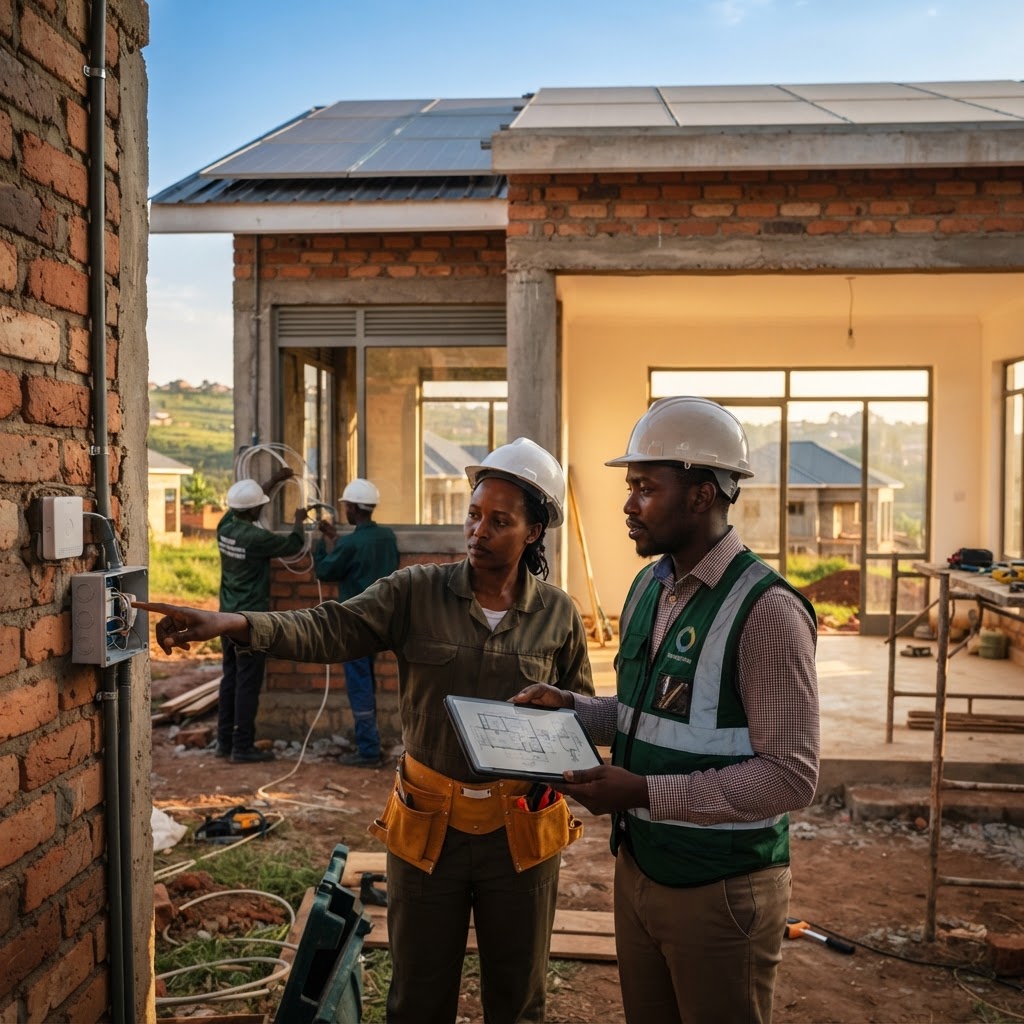
When planning for smart integration, infrastructure comes first. Architects should include dedicated conduit runs for data cables (Cat6) during the structural build, rather than relying solely on wireless signals which may be impacted by thick masonry walls common in local construction. Collaboration with certified IT specialists during the design phase ensures that the electrical layout supports smart load requirements. For suppliers, there is a growing demand for locally available smart-ready hardware. Aligning with vendors who stock surge-protected devices and tropicalised smart equipment is vital, given Uganda’s frequent power fluctuations.
Enhancing Property Value and Investment Potential
For diaspora investors looking to develop properties in Uganda, incorporating smart technology is an excellent way to distinguish a project in a crowded market. Properties that feature integrated security, remote monitoring, and energy-efficient climate control command higher rental yields and see faster capital appreciation. This technology signals to tenants and buyers that the building is managed with precision and future-proofed against modern challenges.
Overcoming Challenges in Implementation
While the benefits are clear, practitioners must be aware of the challenges. High-quality smart devices are sensitive to voltage spikes. Therefore, a robust earthing system and high-capacity surge protection are non-negotiable requirements before installing any smart hardware. Furthermore, reliable internet connectivity is the backbone of these systems. Developers should consider pre-installing fiber-optic or high-speed wireless infrastructure to ensure that smart features remain functional and responsive.
As the construction industry continues to embrace innovation, your ability to adapt to these digital requirements will define your project's success. Whether you are a supplier sourcing the latest smart components, a contractor executing these installations, or a developer planning your next residential block, Uganda CIS is here to support your growth. Register your business today to connect with industry peers at /register, browse our extensive list of vetted material suppliers at /suppliers, or submit a request for a project quotation through our platform at /enquiry to streamline your procurement process.
More Articles